Skip to content

Useful information on documents and healthcare in Tenerife?

The NIE (Número de identidad de Extranjero) is a personal number that you must have in order to live in Spain.

It is sometimes referred to as a NIF, but they are one and the same: the individual identification number within the Spanish tax system. It is essential and indispensable for living in Spain and for carrying out certain specific transactions, such as: buying a property, opening a bank account, setting up electricity and water contracts, buying a car, getting a telephone line, securing an employment contract or taking out any kind of insurance.

Everyone is entitled to receive sickness benefits in kind – such as healthcare and medicines – in their country of residence, regardless of where they are insured. Foreign nationals are entitled to the same treatment as nationals of the country in question. If you are insured in a country other than your country of residence, you must register with the local health authorities in your place of residence. To do this, you must request Form S1 from the organisation with which you are insured and submit it to the relevant authority in your place of residence. This applies to pensioners who decide to spend their retirement in a country other than the one that pays their

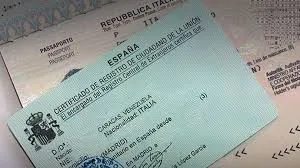
There are two types of NIE: the so-called ‘white’ or provisional NIE and the so-called ‘green’ or permanent NIE, also known as the ‘Certificado de Registro de Ciudadano de la Unión Europea’. The white NIE is easier to obtain than the green one, but it is also more restrictive. You can apply in person or complete the forms online and then make the payment online, provided you have a bank account in Spain.The green NIE, on the other hand, is a permanent NIE which certifies that you are a tax resident in Spain and, consequently, eligible and entitled to the same rights as all those born and resident in Spain who are working legally and paying tax. The green NIE certifies that you are actively participating in society, i.e. that you pay taxes in Spain and are resident there.An important and useful thing to know is that, once the Spanish Government has issued the green NIE (via the police force), it requires a check on your residential and employment status every 5 years; once it has been verified that you meet these specific requirements, the NIE is automatically updated. This step is essential and mandatory, and failure to comply results in fairly hefty fines ranging from 250 to 600 euros if the police establish that the NIE has not been updated.To obtain the green or permanent NIE, certain requirements must be met, as stipulated by the relevant Spanish government body – in this case, the Police Force. There are only four circumstances under which an applicant may obtain the green NIE:
1. as a general
employee; 2. as a self-employed person;
3. as a pensioner
; 4. if not in employment, it is necessary to take out prepaid insurance for 12 and deposit approximately 5.300 euros into a bank account in the name of the person applying for the NIE.

pension and where they are insured. The form is not required for temporary stays.
To register with the Seguridad Social and obtain a number, you must go to the Seguridad Social office in your town or city with a photocopy of your NIE, a photocopy of a valid identity document (a passport or identity card will do) and a copy of your certificate of registration (empadronamiento). When it is your turn, you will need to complete form TA.1 (the ‘application for registration/Social Security number’) and you will immediately be given a slip of paper with your Social Security number, which you can then use to finally start looking for a job.
For working parents (self-employed or employed) who are registered with the Social Security, Silvia Colombini explains how to extend health cover to the whole family: “Today, off to Granadilla for the family’s health cover, by appointment. Documents required: identity card or passport, original NIE, children’s birth certificates and marriage certificate – ‘both strictly in European format’. That’s it. They DO NOT accept alternative documents such as a family status certificate with a sworn translation. Then you go to the relevant health centre for your health card, and there they ALSO ask for your registration certificate (Empadronamiento). All done today. No exceptions.” With all the required documentation, you can access the Canarian public healthcare system; by calling 012 you can book appointments and it’s all free…